Did you know that Mule deer are essential for food security, Syilx (Okanagan) cultural practice and knowledge transfer, hunter opportunity, and are a ‘canary in the coal mine’ for B.C.’s ecosystems?
Did you know that “Mule deer declines have been a concern in portions of the southern interior since the 1960s, and decades of hunting regulation change have not reversed the declines,” reported Jesse Zeman, Director of Fish and Wildlife Restoration, BC Wildlife Federation? ? The reality also is that some local experts have declared hunting seasons and bag limits in the 50s and 60s did irreversible damage to mule deer populations.
Did you know that because you see deer dead on Hwy 97 or in your neighbors’ garden or limping across Princeton Avenue, it cannot be assumed there are plenty of deer?
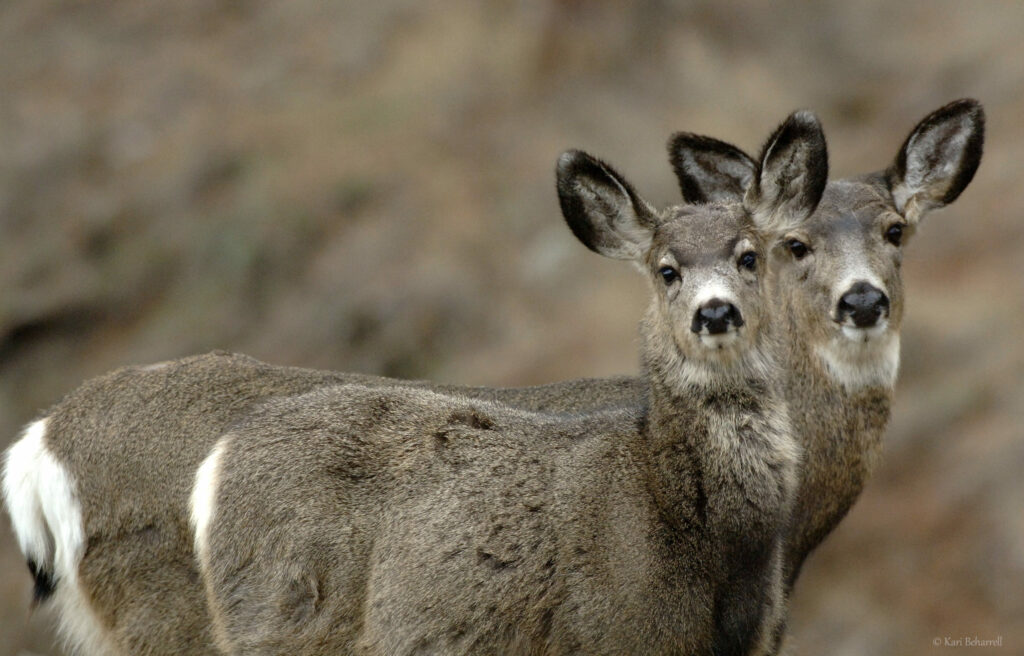
Did you know that a combination of clear-cut logging, fire suppression, highways and especially the Coquihalla Connector, urban sprawl and other factors affect the movement and size of mule deer populations in this area of B.C.? Sophie Gilbert, an Assistant Professor at the University of Idaho and co-investigator on a local Habitat Conservation Trust Foundation Mule Deer research project, said, “in addition to landscape change, things like increases in competitor or predator species may also be affecting mule deer and we want to identify which drivers are most important in the Southern Interior.”
Did you know that the health and vitality of the Syilx Okanagan people is directly tied to the health of their territory and the staple foods available on the land? Mule deer are one of these staples. The Syilx inherent right for food sovereignty is a major factor in some exciting new forestry practices today in Peachland Community Watershed and Westbank First Nations Community Forest. The right to access, today and in the future, a wealth of intact biodiversity fish, roots, berries, and game requires localized wisdom dictated by the seasonal cycles of the land and traditional ecosystem knowledge to manage that land.
Did you know that Ntityix Resources, the forestry branch of Westbank First Nations, is practicing innovative land management techniques to restore and preserve local mule deer wintering range habitat to help reverse the declining numbers. This work is going on now in the Spring Lakes area, 3 kms west of Peachland’s municipal borders, just past the Zip Zone on Peachland Main road. Did you know that other licensees practicing industrial logging are not managing their cut blocks in a similar fashion for wildlife habitat and biodiversity – this is unique to the Spring Lake area in our watershed but, with luck, can grow from a pilot project into standard practice? Our neighbours in Secwepemc area of Tk’emlúps (Kamloops) have also participated in harvesting projects in that are innovative and conducted with due regard to protecting winter range habitat. We agree not enough is being done overall, though.
Did you know that all forest companies must have a Forest Stewardship Plan approved by MFLNRORD that addresses protection of deer winter range in all applicable Districts. Many agree, not enough is being done to modify business as usual logging to preserve winter range habitat. However, the Ntityix team of foresters, biologists and consultants have tracked the deer and set up game cameras for 2 seasons prior to any roading or cut block layouts. They do this to observe the mulie’s environment and patterns.
Did you know the other largest impact from harvesting in deer winter range is density of driveable roads? High road density is making many areas of winter habitat unsuitable for deer use due to high mortality from hunting. There is no legal requirement for maximum road density in deer winter range in BC.
Did you know the Spring Lakes area is now being logged with provisions to:
- Protect upper elevation for wintering mule deer
- Ensure deer range, connectivity corridors and all-season access
- Provide habitat with healthy trees of mixed age, mixed species and crown closure (wildlife don’t like tree farms)
- Reduce clear cut clearing sizes to allow for access across snowy openings, remove pinch points and provide safety from predators
- Remove wildfire fuels too
- Substantially reduce roads as human contact brought about by excessive roading has negative effects. Ntityix intends to deactivate and decommission all spur roads they build during logging operations
- Maintain recreation; known to locals as the “Park”, this favorite leisure area will not look like the traditional barren clear cuts we have been accustomed to in our watershed. New cuts will be small areas with openings averaging 4 hectares, with roads returned to trails. The plan is to maintain a healthy watershed ecosystem for all inhabitants, including plants and animals, such as mule deer.